19 Aug 2026
Work
Warehouse Jobs in Canada

Picker/Packer
Material Handler
Forklift Operator
Shipping and Receiving Clerk
Inventory Control Clerk
Physical Stamina
Attention to Detail
Basic Computer Skills
Communication
Safety Awareness
Time Management
What Qualifications do I Need for Warehouse Jobs in Canada?
Can Foreign Workers Apply for Warehouse Jobs in Canada?
How Much Do Warehouse Workers Earn in Canada?
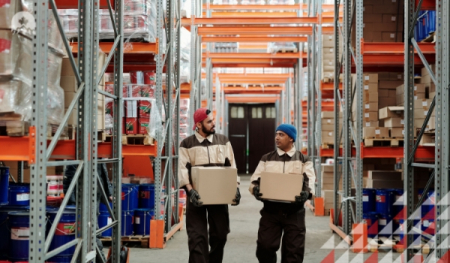
Warehouse jobs in Canada cover a broad range of positions involved in receiving, storing, moving, preparing, and shipping goods. A warehouse worker might unload deliveries in the morning, organize inventory during the day, and prepare customer orders for shipment later in the shift. The work can be found in:
- Distribution centres,
- Manufacturing facilities,
- Retail warehouses,
- Transportation companies,
- Food distribution operations,
- Wholesalers, and
- E-commerce businesses.
Some positions are entry-level, while others require experience with inventory systems, shipping documentation, warehouse equipment, or team supervision. The exact duties depend on the employer and job title. This is important for foreign workers because immigration programs and NOC classification are generally based on the duties actually performed rather than simply the title written on a job advertisement.
Common Warehouse Worker Roles in Canada
A search for warehouse jobs in Canada can produce many different job titles. Understanding the difference between them can help you identify positions that match your experience.
Picker/Packer
A picker/packer prepares customer or business orders for shipment. Pickers locate products on warehouse shelves, verify quantities and product information, and move the selected items to a packing area. Packers then prepare products for transportation by placing them in suitable boxes or containers, adding labels, and checking that orders are complete. These roles can involve standing, walking, lifting, bending, and repetitive movements for much of the shift.
Material Handler
Material handlers move products and materials within warehouses and other industrial facilities. Their duties can include loading and unloading trucks, moving stock, sorting and packing materials, and placing goods in designated storage areas. Under NOC 2021, Material handlers are classified under NOC 75101, which includes warehouse workers, freight handlers, forklift operators, and other material-handling occupations. The official NOC profile states that material handlers may work in transportation, storage, manufacturing, processing, retail, and wholesale warehouses.
Forklift Operator
Forklift operators use powered industrial trucks to move pallets, materials, and other goods around a warehouse or distribution facility. Depending on the workplace, they may load and unload delivery vehicles, move products into storage locations, or retrieve stock for shipment. Employers commonly look for previous equipment experience and may require specific forklift training or certification. Safety is particularly important because forklift operators work around pedestrians, shelving systems, loading docks, and heavy materials.
Shipping and Receiving Clerk
Shipping and receiving clerks help coordinate goods entering and leaving a warehouse. Their work can include checking deliveries, preparing shipping documentation, recording product movements, verifying quantities, and communicating with carriers or other departments. The occupation Shippers and receivers is NOC 14400 under NOC 2021. The official classification includes titles such as:
- Receiving clerk,
- Shipper-receiver,
- Freight receiver,
- Shipping and receiving clerk, and
- Distribution clerk.
Inventory Control Clerk
Inventory-focused warehouse roles involve maintaining accurate records of stock levels and product movements. Workers may count products, investigate discrepancies, update computerized records, and help ensure that the physical inventory matches the information in the company's system. These positions can require stronger computer and record-keeping skills than some general warehouse roles. Experience with warehouse management systems, spreadsheets, scanners, or inventory databases can therefore be useful.
Warehouse Worker Duties
Although duties vary by position, common responsibilities in warehouse jobs in Canada can include:
- Loading and unloading deliveries
- Moving products manually or with material-handling equipment
- Picking products from shelves
- Packing and labelling orders
- Sorting and organizing inventory
- Checking quantities and product information
- Preparing goods for shipment
- Receiving incoming stock
- Recording inventory movements
- Operating forklifts or other warehouse equipment
- Maintaining a clean and safe work area
- Assisting with stock counts and inventory checks
The official NOC profile for material handlers includes:
- Loading,
- Unloading,
- Moving,
- Counting,
- Weighing,
- Sorting,
- Packing,
- Unpacking materials,
- as well as operating industrial trucks and other equipment.
Warehouse Jobs in Canada: NOC Codes and TEER Categories
NOC classification matters if you are considering Canadian immigration because the occupation associated with your employment may be relevant to an immigration application. Two NOC classifications commonly associated with warehouse work are NOC 75101 – Material handlers and NOC 14400 – Shippers and receivers.
| Warehouse-related occupation | NOC 2021 | TEER | Examples |
|---|---|---|---|
| Material handlers | 75101 | 5 | Warehouse worker, material handler, forklift operator |
| Shippers and receivers | 14400 | 4 | Shipping clerk, receiving clerk, shipper-receiver |
It is important to correct a common misconception here: NOC 14400 is TEER 4, not TEER 3. NOC 75101 is classified as TEER 5. The official NOC profiles identify NOC 75101 as TEER 5 and NOC 14400 as TEER 4. Your job title alone does not determine the correct NOC. Compare your actual day-to-day responsibilities with the official NOC description before using an occupation code for an immigration application.
This distinction is especially important because two people working in the same warehouse could have different classifications depending on their responsibilities. A material handler moving and loading goods may fall under NOC 75101, while a shipping and receiving clerk responsible for documentation and shipment records may fall under NOC 14400.
How Much Do Warehouse Workers Make in Canada?
Warehouse pay varies according to the occupation, province, employer, experience, shift, responsibilities, and local labour market. For example, the Government of Canada's Job Bank currently reports national wages for material handlers (NOC 75101) of approximately 16.55 CAD per hour at the low end, 22.00 CAD per hour at the median, and 30.29 CAD per hour at the high end.
These figures are based on the reference period shown by Job Bank and should not be treated as a guaranteed starting wage for every vacancy. Entry-level warehouse jobs may therefore start around 15 CAD to 18 CAD per hour in some circumstances, but actual offers can be higher or lower depending on the employer and location.
Candidates should always check the wage stated in the specific job advertisement and compare it with applicable provincial or territorial employment standards. Forklift operators, experienced warehouse workers, shipping and receiving clerks, and employees working night or specialized shifts may have different earning potential from general entry-level warehouse positions.
It is also worth looking beyond the hourly wage. When comparing offers, consider the number of guaranteed hours, overtime rules, shift premiums, vacation pay, benefits, transportation requirements, and whether the position is permanent, temporary, full-time, part-time, or seasonal.
Skills Needed for Warehouse Jobs in Canada
Warehouse work does not necessarily require an advanced educational qualification, but employers generally look for reliability, physical ability, attention to detail, and the capacity to work safely in a fast-moving environment. Useful skills include:
Physical Stamina
Many warehouse positions involve standing, walking, lifting, carrying, bending, and repetitive tasks. Material handlers who work with heavy materials may need significant physical strength.
Attention to Detail
Picking the wrong product or entering an incorrect quantity can create shipping and inventory problems. Careful workers are therefore valuable in picking, packing, receiving, and inventory positions.
Basic Computer Skills
Modern warehouses often use barcode scanners, inventory databases, warehouse management systems, and electronic shipping systems. Basic computer literacy can make it easier to learn these tools.
Communication
Warehouse workers need to communicate with supervisors, coworkers, drivers, shipping departments, and other employees. Basic English or French may be sufficient for some positions, but the language level required varies by employer and role.
Safety Awareness
Workers must follow workplace safety procedures and use equipment correctly. Employers may provide training, but candidates should be prepared to follow instructions and report hazards.
Time Management
Warehouse environments can involve daily targets, scheduled shipments, and strict delivery deadlines. Being able to prioritize tasks while maintaining accuracy can be an advantage.
Education and Experience Requirements
Requirements differ between employers and occupations. For NOC 75101 material handlers, some secondary school education may be required, while physical strength may be necessary for manual material-handling positions. For NOC 14400 shippers and receivers, completion of secondary school is usually required.
Related clerical or warehouse experience may also be requested, while a forklift certificate or driver's licence may be required for certain positions. This means that not every warehouse job requires previous Canadian experience. Some employers provide workplace training, while others prefer candidates who already understand warehouse procedures or have experience using specific equipment.
If you are applying from outside Canada, highlight transferable experience from warehouses, factories, retail distribution centres, logistics companies, supermarkets, manufacturing facilities, or similar workplaces.
Warehouse Training and Certifications
Training requirements depend on the position. A general warehouse worker may receive on-the-job instruction covering safety procedures, picking systems, packaging standards, and workplace processes. Forklift positions are different. Employers may require evidence of appropriate training or certification before allowing a worker to operate specific equipment. NOC 14400 also notes that a forklift certificate may be required for some shipping and receiving positions.
Other useful training can include:
- Workplace health and safety training
- WHMIS training where applicable
- Forklift or powered industrial truck training
- Inventory management systems
- Barcode scanner and warehouse technology training
- Transportation and shipping documentation
- Basic computer skills
Having relevant training does not guarantee employment, but it can make your application more competitive.
Can Foreign Workers Get Warehouse Jobs in Canada?
Foreign workers can work in Canada if they have the appropriate authorization and meet the requirements of the applicable work permit or immigration program. A job offer does not automatically give a foreign national the right to work in Canada. Depending on the circumstances, an employer-specific work permit may be required, and the employer may need to obtain a Labour Market Impact Assessment (LMIA).
IRCC explains that an employer-specific work permit allows a worker to work under the conditions listed on the permit, including details such as the employer, location, and occupation. Where an LMIA is required, the employer generally needs a positive LMIA before the worker applies for the work permit. Some foreign workers may already hold an open work permit, in which case an LMIA may not be required for their employment.
Eligibility depends on the specific open work permit category and the worker's circumstances. For employer-specific applications, IRCC may require documents such as a job offer, employment contract, proof of work experience, résumé, and evidence that the applicant meets the requirements of the job. If the position requires an LMIA, additional employer documents are generally required.
Be Careful With "Warehouse Jobs With Visa Sponsorship"
Foreign workers often search online for phrases such as "warehouse jobs in Canada with visa sponsorship" or "warehouse jobs with LMIA sponsorship." Treat these advertisements carefully. Canadian employers do not simply "sponsor a visa" in the same way that the term is sometimes used on international job websites. In many cases, the relevant process involves a Canadian work permit, and an employer may need an LMIA before the worker can apply for an employer-specific work permit.
IRCC states that most jobs require an LMIA when an employer wants to hire a temporary foreign worker, although exemptions exist. Never pay someone simply because they claim they can guarantee a Canadian warehouse job, LMIA, or work permit. Verify the employer, job offer, wage, location, recruitment process, and immigration requirements before giving anyone money or personal documents.
Where to Find Warehouse Jobs in Canada
This page is designed as a guide to warehouse jobs in Canada, rather than a live vacancy board. Job availability changes frequently, so candidates should search current listings directly through reputable employment platforms. Useful places to start include:
- Government of Canada's Job Bank: Search for material handler, warehouse worker, shipper/receiver, forklift operator, warehouse associate, and related positions. Job Bank also provides wage information and other labour-market details.
- Indeed Canada: Search by job title and location, then check the employer's details and application requirements.
- LinkedIn Jobs: Useful for warehouse, logistics, inventory, and distribution roles, particularly with larger employers.
- Workopolis: Another Canadian employment platform where warehouse and logistics vacancies may be advertised.
- Employer career pages: Large retailers, manufacturers, logistics companies, grocery distributors, and transportation businesses often publish vacancies directly on their websites.
When searching, try several related terms rather than only "warehouse worker." Useful searches include:
- Warehouse Associate,
- Material Handler,
- Warehouse Labourer,
- Picker Packer,
- Order picker,
- Forklift operator,
- Shipping and receiving clerk,
- Inventory clerk,
- Distribution centre worker, and
- Warehouse associate.
How to Apply for Warehouse Jobs in Canada
A strong application should make it easy for an employer to understand what you can do. Start with a simple résumé that clearly lists your previous employers, job titles, dates of employment, duties, equipment experience, certifications, and relevant skills. Instead of writing only "worked in a warehouse," describe what you actually did. For example, you could mention experience with loading and unloading trucks, picking customer orders, operating pallet jacks, completing inventory counts, using barcode scanners, preparing shipments, or working with forklifts.
If you are applying from outside Canada, be transparent about your current immigration status. Do not state that you are legally authorized to work in Canada if you do not currently have that authorization. IRCC specifically advises that people who need a work permit and do not yet have one cannot legally work in Canada or claim on a job application that they are legally allowed to work.
Is a Warehouse Job a Good Starting Point for Newcomers?
For some newcomers, warehouse work can provide an accessible way to gain Canadian employment experience and learn how workplaces operate. Entry-level positions may have fewer formal education requirements than some professional occupations, although physical demands and shift schedules can be significant. Warehouse work can also provide opportunities to develop transferable skills.
With experience and additional training, workers may move into forklift operations, inventory control, shipping and receiving, logistics coordination, or supervisory roles. However, you should not assume that any warehouse position will automatically qualify you for permanent residence. Immigration eligibility depends on the specific program, occupation, NOC, work experience, language ability, education, location, and other factors.
FAQs
What Qualifications do I Need for Warehouse Jobs in Canada?
Many entry-level warehouse jobs require a high school education, physical stamina, reliability, and basic communication skills, although requirements vary by employer and position. Forklift operators, shipping clerks, and inventory workers may need additional training, experience, or certifications.
Can Foreign Workers Apply for Warehouse Jobs in Canada?
Yes, foreign workers can apply for warehouse jobs if they meet the employer's requirements and have the appropriate authorization to work in Canada. Depending on the position and work permit category, an employer may also need to obtain an LMIA.
How Much Do Warehouse Workers Earn in Canada?
Warehouse wages vary by occupation, location, experience, employer, and shift, with some entry-level positions starting around 15 CAD to 18 CAD per hour. More experienced workers and specialized roles, such as forklift operators or shipping and receiving clerks, may earn higher wages.
Picker/Packer
Material Handler
Forklift Operator
Shipping and Receiving Clerk
Inventory Control Clerk
Physical Stamina
Attention to Detail
Basic Computer Skills
Communication
Safety Awareness
Time Management
What Qualifications do I Need for Warehouse Jobs in Canada?
Can Foreign Workers Apply for Warehouse Jobs in Canada?
How Much Do Warehouse Workers Earn in Canada?